The bridge
The bridge is the wooden structure on the road leading into the village, where K. first stops upon his arrival, gazing up at the seemingly void Castle Mount. It marks the threshold between the outside world and the village that belongs to the castle, and it recurs as a point of passage, observation, and symbolic boundary throughout the novel.
The Threshold of Arrival
K. arrives at the village late in the evening, and the first thing he does is stand on the wooden bridge leading from the road to the village, looking up at what seems to be a void. The mist and darkness hide Castle Mount, and not the faintest glimmer of light shows where the great castle lies. This moment establishes the bridge as the point where the traveler first confronts the village and its mysterious relationship to the castle. The bridge is also where the young man Schwarzer later confronts K., telling him that the village belongs to the castle and that anyone staying overnight needs a permit from the count. The bridge thus becomes the site of the initial challenge to K.'s presence, a place where the rules of the village are first articulated.
A Point of Passage and Observation
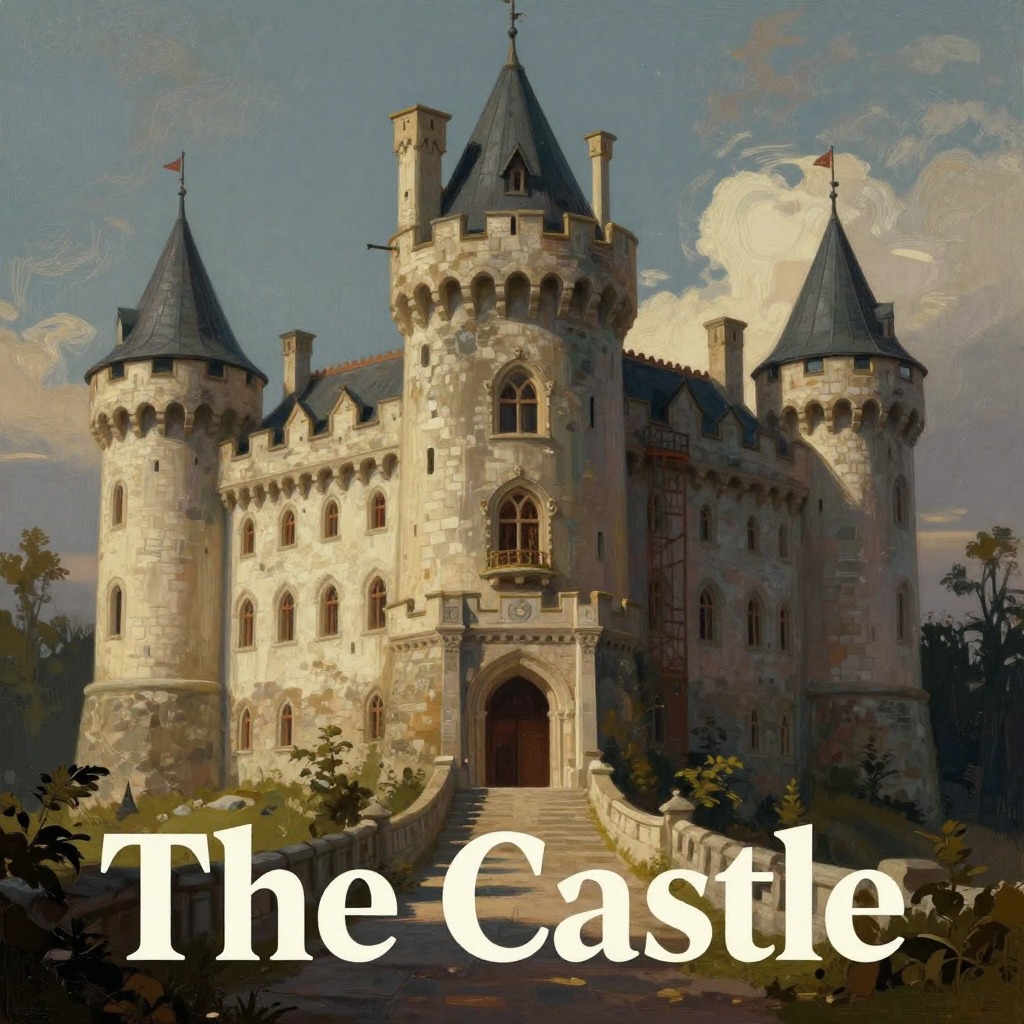
The bridge serves as a recurring point of passage for K. as he moves between the village and the surrounding landscape. When K. first sees the castle in the clear air of the morning, he stands on the bridge and observes the castle's outline, noting that it is neither an old knightly castle nor a showy new structure, but an extensive complex of buildings that might be mistaken for a small town. The bridge offers a vantage point from which K. can survey the village and the castle, and it is from here that he notices the church, the school, and the teacher with his pupils. The bridge also appears in K.'s memories of his hometown, where a church in the main square is surrounded by a graveyard and a high wall, a memory that surfaces as he walks with Barnabas through the snowy night.
Symbolic Boundary and Exclusion
The bridge marks the boundary between the village and the outside world, and it is a place where K.'s status as an outsider is repeatedly emphasized. When K. first arrives, he is told that the village belongs to the castle, and the bridge is the point where this claim is made. Later, when K. is expelled from Lasemann's house, he is left standing in the snow, and the bridge is not mentioned, but the sense of exclusion is palpable. The bridge also appears in the context of the Castle Inn, where K. is told that the inn is exclusively for the use of the gentlemen from the castle, and the bridge serves as a reminder of the barriers that separate K. from the castle and its inhabitants.
The Bridge in the Wider Landscape
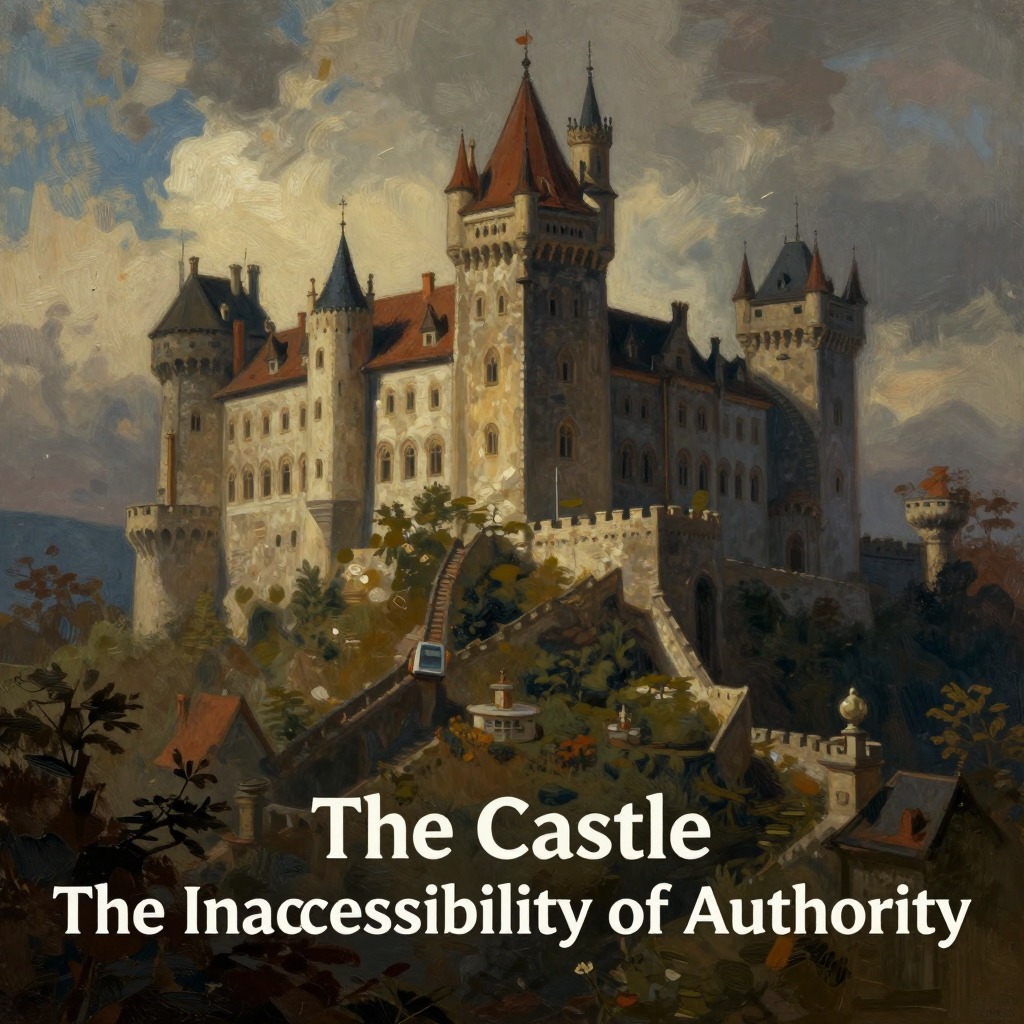
The bridge is part of a network of roads and paths that connect the village to the castle and the surrounding countryside. K. notes that the main street of the village does not lead to Castle Mount but merely passes close to it before turning aside, and the bridge is one of the points where this divergence is visible. The bridge also appears in the context of the sleigh ride with Gerstäcker, when K. is taken to the Castle Inn, and in the description of the yard of the Castle Inn, which is enclosed on three sides by the inn building and on the other side by a high white wall. The bridge thus becomes a symbol of the inaccessibility of the castle and the difficulty of K.'s quest.
The Bridge as a Recurring Motif
The bridge recurs throughout the novel as a motif of transition and uncertainty. It is where K. first arrives, where he is challenged, where he observes the castle, and where he is reminded of his own past. The bridge is also a place where K. experiences moments of reflection and weariness, as when he stands on it and feels the weight of his journey. In this sense, the bridge is not just a physical structure but a psychological and symbolic space that reflects K.'s state of mind and his relationship to the village and the castle. The bridge, like the village itself, is a threshold that K. can never fully cross, a point of entry that remains perpetually open yet perpetually barred.